In today's digital-first dining landscape, a restaurant's success is increasingly determined online long before a customer walks through the door. For Asian cuisine restaurants—particularly Chinese and Korean establishments—this reality is amplified. Operating in highly competitive markets where dozens of venues may offer similar dishes, the battle for customers is often won or lost in search engine results and on review platforms. A single search for "best Korean BBQ near me" or "authentic Chinese restaurant" yields not just a list of options, but a hierarchy dictated by star ratings and customer testimonials. This digital storefront has made online reputation, especially on trusted platforms like Trustpilot, a critical asset for attracting new diners, building credibility, and ensuring sustainable growth. This content explores the pivotal role of Trustpilot reviews, examining the digital shift in consumer behavior, the powerful influence of reviews on decision-making, and why Trustpilot specifically is an indispensable tool for Asian cuisine restaurants aiming to thrive.
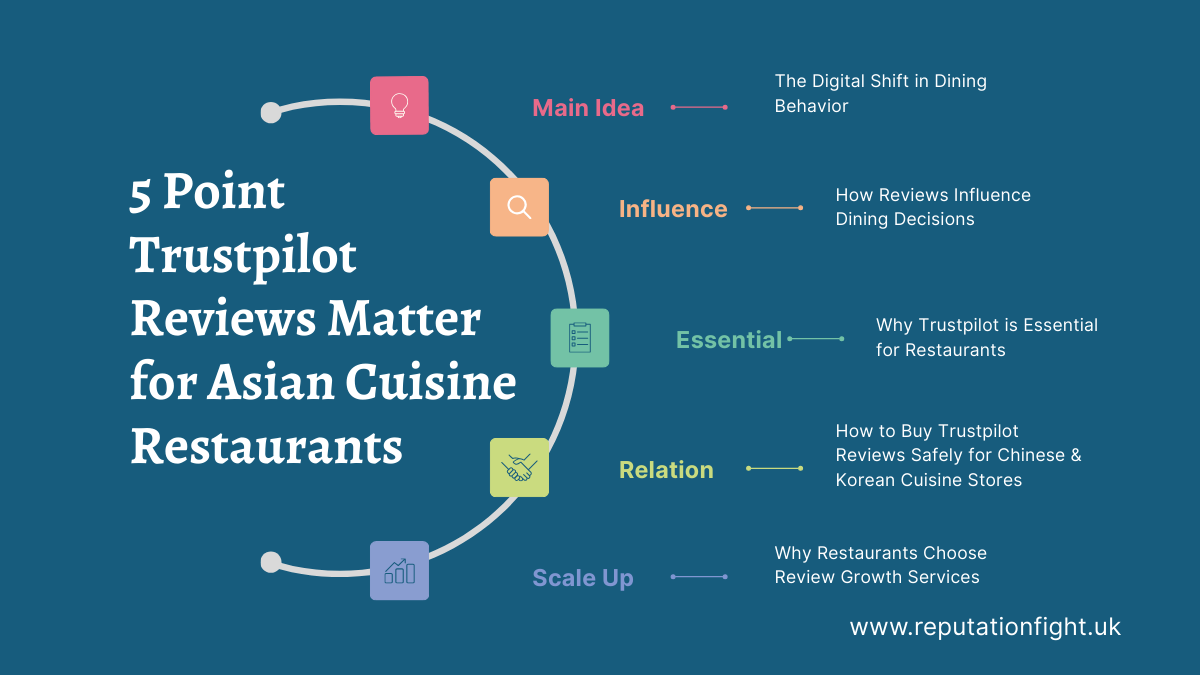
The Digital Shift in Dining Behavior
The Rise of Online Food Discovery
Gone are the days when a colorful street sign or a personal recommendation were the primary ways to discover a new restaurant. The past decade has seen a monumental shift in consumer behavior, with online platforms becoming the starting point for virtually every dining decision. Smartphones, food delivery apps (like Uber Eats, DoorDash), and search engines like Google are now the first ports of call. Customers actively search for solutions to their cravings, using specific, intent-driven phrases such as "Chinese restaurant near me," "best Korean fried chicken," or "top-rated Asian restaurant." These searches happen millions of times per month globally. For Asian cuisine restaurants, this trend represents a tremendous opportunity to reach a vast, targeted audience actively seeking what they offer. However, it also creates a significant challenge: online invisibility. Search algorithms prioritize businesses that demonstrate popularity, activity, and trustworthiness—metrics heavily influenced by the volume and quality of reviews. A restaurant with few or no reviews is often filtered out, remaining unseen by the very customers searching for it.
How Mobile Searches Drive Instant Decisions
The context of these searches is crucial. The majority occur on mobile devices, frequently when the user is already hungry and looking for immediate options—during a lunch break, on the commute home, or while deciding on dinner. This context fosters rapid, low-effort decision-making. Potential diners rarely delve deep into multiple websites or lengthy menus. Instead, they scan search results and business profiles, making snap judgments based on key visual cues: the star rating, the number of reviews, and the preview snippets of recent feedback. A restaurant with a 4.5-star rating and 150 reviews will invariably attract more clicks than a competitor with a 3.8-star rating and 20 reviews, even if the latter's food is superior. This mobile-driven, instant-gratification culture means a restaurant's online review profile functions as its most effective digital marketing agent, working 24/7 to convert casual scrollers into confirmed customers.
Why Asian Cuisine Benefits from Online Visibility
Asian cuisines, particularly Chinese and Korean, enjoy immense and growing global popularity. This popularity, however, leads to saturated markets in many urban areas. A neighborhood might host numerous Chinese takeaways, Korean BBQ joints, and ramen bars. In this crowded field, differentiation is key. While factors like a secret family recipe or a unique dining atmosphere matter, they are intangible to someone browsing online. A robust collection of positive online reviews makes these qualities tangible. It translates subjective excellence into objective social proof. For a customer comparing five similar Korean restaurants on a map, the one with the most consistently glowing reviews about "authentic flavors," "generous portions," and "friendly service" will win the click, the call, and the visit. Therefore, a strategic focus on building and managing online reviews is not just about reputation management; it's a direct customer acquisition strategy tailored for the competitive reality of the Asian food sector.
How Reviews Influence Dining Decisions
Online Reviews as Digital Word of Mouth
Online reviews have effectively become the 21st-century version of word-of-mouth, but with far greater reach and permanence. Where one might once have trusted a friend's recommendation, they now trust the aggregated opinions of dozens or hundreds of strangers. This digital word-of-mouth is incredibly persuasive because it is perceived as unbiased and experiential. For Asian cuisine restaurants, this is particularly powerful. Reviews answer the nuanced questions potential customers are silently asking: "Is this real Sichuan food, or is it toned down?" "As someone who's never had Korean food, will I feel welcome and know what to order?" "Are the prices justified by the quality and portion size?" Detailed, positive reviews directly address these concerns, reducing perceived risk and building the confidence necessary for a customer to choose your restaurant over a more familiar alternative.
The Role of Reviews for First-Time Customers
The barrier to trial for unfamiliar cuisine can be high. First-time customers of Korean or Chinese restaurants may feel uncertain about menu items, spice levels, ingredients, or even dining etiquette. A blank or sparse review profile does nothing to alleviate these concerns and may even intensify them. In contrast, a healthy profile of reviews acts as a guide and a reassurance. A new customer can read, "As a first-timer, the staff were incredibly helpful in explaining the menu," or "The bulgogi was a perfect introduction—flavorful but not too intimidating." These reviews demystify the experience, making the restaurant feel accessible and welcoming. They transform the unknown into an exciting adventure rather than a daunting gamble, effectively lowering the barrier to entry and driving valuable first-time visits.
How Star Ratings Shape Customer Perception
The psychology of the star rating is profound. It serves as an instantaneous, universally understood metric of quality. Before a single review is read, a star rating forms a critical first impression. Research in consumer behavior consistently shows that the difference between a 4.2 and a 4.5-star average can lead to a substantial increase in conversion rates—sometimes by 50% or more. High ratings trigger positive assumptions about food quality, service, and cleanliness. They also influence click-through rates in search results and on map applications. For Asian cuisine restaurants, a high aggregate rating is a non-negotiable credential. It signals consistency and excellence in a market where customers, faced with many choices, will use this simple filter to narrow down their options rapidly.
Reviews and Price Sensitivity
Positive reviews have a direct impact on a customer's willingness to pay. In the absence of reviews, customers are more price-sensitive, likely to choose the cheapest option to minimize potential loss. However, strong, authentic reviews reframe the value proposition. They justify premium pricing for specialty dishes like live lobster, multi-course Peking duck banquets, or high-quality Korean BBQ meats. When customers read reviews praising the "melt-in-your-mouth short ribs" or the "incredibly fresh and flavorful seafood hot pot," the price becomes linked to a promised experience of quality and authenticity. The restaurant is no longer just selling calories; it's selling a verified, enjoyable experience. This shift allows restaurants to maintain healthier margins and invest in better ingredients, creating a virtuous cycle of quality and positive feedback.
Why Trustpilot is Essential for Restaurants
Trustpilot as a Global Trust Platform
While many review platforms exist, Trustpilot holds a unique position as a dedicated, global trust and credibility platform. Its brand is synonymous with verified, authentic customer feedback across industries. For a restaurant, this association is invaluable. Unlike platforms tied to a specific service (like delivery apps), Trustpilot focuses on the holistic customer experience. Reviews here are often more detailed, covering ambiance, service, food quality, and overall value, providing a more complete picture than a simple "delivery was fast" note. The platform's structure, which actively invites and verifies reviews, lends its feedback a high degree of credibility in the eyes of consumers. Having an active Trustpilot profile signals that a business is transparent, confident, and committed to customer satisfaction.
Building a Standalone Brand Reputation
Relying exclusively on reviews embedded within food delivery or reservation apps confines a restaurant's reputation to those siloed ecosystems. A customer on Yelp might never see your glowing Uber Eats reviews. Trustpilot solves this by creating a centralized, standalone repository of your reputation that is easily discoverable via search engines. This profile becomes a cornerstone of your brand's digital identity. It's a destination you can link to from your website, social media, and email signatures. By cultivating your Trustpilot reputation, you are building brand equity that you own and control, independent of third-party app algorithms or policies. This is crucial for attracting customers for all occasions—dine-in, takeaway, catering, and large group bookings.
Enhancing Visibility in Search Results
Search Engine Optimization (SEO) is critical for local businesses. When a potential customer Googles your restaurant's name specifically, the results on that first page shape their perception. A well-maintained Trustpilot profile frequently ranks highly in these "branded search" results. Its appearance acts as a powerful trust signal. Seeing a 4.7-star rating from 300+ reviews on Trustpilot immediately tells the researcher that the business is legitimate, reputable, and has a track record of satisfying customers. This external validation is far more persuasive than anything a restaurant can say about itself on its own website. It shortcuts the research phase and builds confidence, making the final step of placing an order or booking a table much more likely.
Solving the "New Restaurant" Trust Gap
The launch phase for a new Chinese or Korean restaurant is fraught with the "cold start" problem: you need customers to get reviews, but you need reviews to get customers. An empty or near-empty review profile on Google or Yelp can be a significant deterrent. Trustpilot offers a structured and reputable platform to proactively manage this challenge. Restaurant owners can begin by encouraging their earliest satisfied customers to leave feedback on Trustpilot. Because the platform is designed for review collection, it can often be easier to generate initial momentum here than on more passive directories. A new restaurant with even 15-20 thoughtful, positive reviews on Trustpilot presents a dramatically more credible and appealing image than one with no digital footprint, effectively bridging the trust gap and accelerating the path to becoming a established local favorite.
How to Buy Trustpilot Reviews Safely for Chinese & Korean Cuisine Stores
In the competitive world of Asian cuisine restaurants, online reviews have become currency in the digital economy. For Chinese and Korean establishments, where authenticity and quality can be subjective for newcomers, building a strong Trustpilot profile quickly can mean the difference between a thriving business and one that struggles to gain traction. While organic review growth is ideal, the reality of today's market often necessitates a more proactive approach. Many restaurant owners consider purchasing reviews to jumpstart their online reputation, but this strategy must be approached with caution and strategic thinking to avoid platform violations and maintain credibility. Understanding how to buy Trustpilot reviews safely—focusing on gradual growth, authentic content, and compliance—can provide a significant competitive advantage while building the foundation for long-term organic reputation management.
How to Buy Trustpilot Reviews Safely
Choose a Reputable Provider
The single most important factor in safely purchasing Trustpilot reviews is selecting a legitimate provider with a track record of ethical practices. A reputable provider understands platform guidelines and creates reviews that mimic genuine customer experiences. For Asian cuisine restaurants, this means reviews should specifically mention menu items, dining ambiance, service quality, and aspects relevant to Chinese or Korean food culture. A provider like ReputationFight UK specializes in creating region-specific, platform-compliant reviews that help restaurants build credibility without triggering red flags. Legitimate providers use real accounts with purchase verification where possible, create geographically appropriate profiles, and ensure reviews are posted gradually rather than in suspicious batches.
Focus on Realistic Review Volume
One of the biggest mistakes restaurants make when purchasing reviews is opting for packages that promise hundreds of reviews overnight. Sudden spikes in review activity are easily detected by Trustpilot's algorithms and appear suspicious to potential customers reviewing your profile. A safe approach involves gradual, steady growth that mirrors organic customer acquisition. For a new restaurant, aiming for 5-10 quality reviews per month initially creates a natural-looking progression. This measured approach not only avoids platform penalties but also builds a more believable reputation narrative that evolves alongside your actual business growth.
Ensure High-Quality, Natural Reviews
The content quality matters as much as the quantity. Generic, templated reviews that sound robotic ("Great food, good service") fail to convince discerning customers and can damage credibility. Safe review providers craft detailed, unique feedback that reflects genuine dining experiences. For Chinese cuisine, this might include specific praise for soup dumplings' texture or the perfect balance of sweet and sour in a sauce. For Korean restaurants, authentic reviews might mention the quality of banchan (side dishes) or the helpfulness of staff in explaining BBQ cooking methods. These detailed, culturally-aware reviews serve the dual purpose of building trust and educating potential customers about your offerings.
Use Country-Specific and Local Profiles
Geographic relevance significantly impacts review credibility. Reviews from profiles that appear to be local customers carry more weight with both potential diners and search engine algorithms. A safe provider ensures reviews originate from profiles with appropriate geographic indicators and IP addresses. For restaurants targeting specific communities—whether it's a Korean restaurant in a metropolitan area or a Chinese establishment in a suburban neighborhood—locally-relevant reviews demonstrate that your restaurant has successfully integrated into and is appreciated by your target market.
Combine Purchased Reviews with Organic Feedback
Purchased reviews should never replace genuine customer feedback; they should complement and stimulate it. A strategic approach involves using purchased reviews to establish initial credibility, then actively encouraging organic reviews from real customers. Tactics include training staff to politely ask satisfied diners to share their experience on Trustpilot, adding direct links to your Trustpilot profile on receipts and menus, and showcasing positive reviews on your social media to inspire others. This blended approach creates a sustainable review ecosystem where purchased reviews provide the initial social proof needed to attract real customers, whose authentic feedback then perpetuates your positive reputation.
Challenges Faced by Chinese & Korean Cuisine Stores
The global popularity of Asian cuisine creates both opportunities and distinct challenges for restaurant owners. While demand for authentic Chinese and Korean food continues to grow, so does competition and customer skepticism. These challenges extend beyond kitchen operations into the digital realm, where perception often trumps reality. Understanding these obstacles—from market saturation to cultural unfamiliarity—is essential for developing effective reputation management strategies that address the specific pain points of Asian cuisine restaurants in competitive food markets.
High Competition in Local Food Markets
Saturated Restaurant Landscapes
In most urban and suburban areas, Chinese and Korean restaurants face intense competition. From family-run noodle shops to upscale BBQ establishments, customers have abundant choices within short distances. This saturation makes differentiation difficult, particularly when menus, pricing, and even decor can appear similar across establishments. In such environments, customers increasingly rely on digital signals to make decisions. When searching "Chinese food delivery" or "Korean restaurant near me," they're presented with multiple options side-by-side, creating an immediate comparison environment where review count and ratings become decisive factors in their selection process.
Competing for Attention Online
The competition has shifted from physical foot traffic to digital visibility. Platforms like Google Business Profile, Yelp, and food delivery apps create virtual marketplaces where restaurants compete for clicks and conversions. In these digital spaces, a restaurant's review profile serves as its primary sales representative. An establishment with higher ratings and more reviews naturally ranks higher, receives more clicks, and appears more frequently in recommendations. For Asian cuisine restaurants, this means food quality alone is insufficient—a strong, actively-managed online reputation is necessary to capture attention in crowded digital marketplaces before customers ever taste the food.
New Restaurant Trust Issues
The Trust Gap for New Openings
Every new restaurant faces skepticism, but this challenge is amplified for Asian cuisine establishments. Potential customers question authenticity, ingredient quality, and whether the experience will match their expectations based on previous experiences with established competitors. This "trust gap" is particularly wide during the crucial first 6-12 months of operation when there's limited social proof available. Without reviews to validate claims of quality, even restaurants with exceptional chefs and authentic recipes struggle to overcome customer hesitation in favor of proven alternatives.
Online Silence Creates Doubt
In the digital age, an absence of information is often interpreted negatively. When customers research a new Chinese or Korean restaurant and find empty review profiles or minimal feedback, they may interpret this silence as a warning sign. The subconscious reasoning becomes: "If this place were good, people would be talking about it." This perception issue forces new restaurants into a challenging cycle where they need customers to get reviews but need reviews to get customers. Breaking this cycle requires proactive reputation management from the earliest days of operation.
Low Initial Review Count
The Early Review Problem
Most satisfied customers don't leave reviews spontaneously. Research suggests only 1 in 10 happy customers will leave feedback without prompting. This reality creates a "cold start" problem for restaurants, where positive experiences don't translate into visible social proof. For Asian cuisine restaurants, this is particularly damaging because the unfamiliar nature of some dishes makes potential customers especially reliant on peer validation before trying something new. A restaurant with excellent food but only three reviews loses business to a mediocre competitor with three hundred.
Algorithms Favor Established Profiles
Search and recommendation algorithms across platforms consistently favor businesses with established review histories. These systems interpret more reviews as signals of popularity, reliability, and relevance. Consequently, restaurants with low review counts suffer from reduced visibility in search results, fewer recommendations in map applications, and lower placement in delivery app interfaces. This algorithmic bias creates a structural disadvantage for newer or less digitally-active Asian cuisine restaurants, regardless of their actual food quality or service standards.
Cultural Food Unfamiliarity for New Customers
Fear of the Unknown
Despite growing popularity, Chinese and Korean cuisines still present barriers for some customers. Concerns about unfamiliar ingredients, challenging pronunciations, unknown spice levels, or differing dining etiquette can create hesitation. Customers might wonder: "Will I like fermented bean paste?" "How do I eat Korean BBQ properly?" "Is this dish going to be too adventurous for my taste?" These questions, left unanswered, often lead potential customers to choose more familiar cuisine options, even when they're genuinely curious about trying something new.
Reviews as Cultural Translators
Well-crafted reviews serve as cultural ambassadors for Asian cuisine restaurants. They translate the dining experience into relatable terms for newcomers. A review stating, "The staff patiently explained each component of the Korean table setting," or "As someone who doesn't usually like spicy food, the Mapo Tofu had perfect heat," directly addresses common concerns. These reviews demystify the experience, making the cuisine feel accessible rather than intimidating. They provide the social permission and practical guidance that encourages first-time customers to step outside their culinary comfort zones.
Why Restaurants Choose Review Growth Services
As the challenges facing Asian cuisine restaurants become increasingly digital, many owners turn to professional review growth services as a strategic solution. These services address specific pain points in reputation management, offering structured approaches to building credibility, visibility, and competitive advantage. From accelerating initial growth to maintaining market position, review growth services provide measurable benefits that extend beyond simple star ratings to impact fundamental business metrics like customer acquisition cost, conversion rates, and long-term brand equity.
Faster Reputation Building
Overcoming the Slow Start Problem
The traditional timeline for organic reputation building—waiting months to accumulate meaningful review volume—poses significant business risks in today's fast-paced market. Review growth services compress this timeline by systematically generating authentic-seeming feedback that establishes credibility quickly. For a new Chinese or Korean restaurant, this accelerated timeline can mean the difference between gaining early momentum and struggling through a prolonged, costly introductory phase. Faster reputation building allows restaurants to begin competing effectively from their first weeks of operation rather than waiting six months to establish digital credibility.
Making a Strong First Impression
Digital first impressions are formed within seconds. When potential customers encounter a restaurant with a well-developed review profile—featuring consistent recent feedback, detailed commentary, and strong ratings—they form immediate positive associations about quality, popularity, and reliability. Review growth services help create this favorable first impression from day one, ensuring that initial digital interactions work to attract rather than deter potential customers. This strong foundation supports all subsequent marketing efforts, from social media campaigns to local advertising.
Balanced Online Presence
Avoiding Reputation Gaps
Many restaurants develop uneven online reputations—strong on one platform but weak or nonexistent on others. This inconsistency creates confusion and reduces overall credibility, as customers increasingly cross-reference multiple platforms before making dining decisions. Review growth services help maintain synchronized reputation development across all major platforms, including Trustpilot, Google, Yelp, and industry-specific sites. This balanced presence ensures that wherever customers encounter your restaurant online, they receive consistent, positive signals about quality and reliability.
Consistency Builds Trust
A synchronized, multi-platform review profile creates a powerful narrative of consistent excellence. When customers see matching high ratings and similar positive themes across Trustpilot, Google Reviews, and Facebook, they receive reinforced confirmation of your restaurant's quality. This consistency significantly reduces purchase anxiety and decision-making time. For Asian cuisine restaurants, where customers may already experience some uncertainty about menu choices, this cross-platform validation provides the reassurance needed to convert interest into reservations and orders.
Support During Restaurant Launch or Rebranding
Critical Timing for New Restaurants
The launch phase represents a vulnerable period with high fixed costs and unpredictable revenue. Professional review support during this phase provides a strategic buffer, ensuring that digital visibility and credibility develop alongside operational capabilities. Rather than waiting for organic reviews to trickle in, launch-focused review services create immediate social proof that attracts early adopters and generates crucial initial revenue. This support can be particularly valuable for Asian cuisine concepts introducing unfamiliar dishes or dining formats to their local market.
Strengthening Rebranding Efforts
Rebranding—whether changing concepts, updating menus, or targeting new customer segments—essentially restarts the reputation building process. Existing reviews may no longer reflect the new direction, creating confusion and undermining rebranding investments. Review growth services help bridge this transition by generating fresh feedback that aligns with the updated concept. For a Chinese restaurant transitioning from fast-casual to fine dining, or a Korean establishment adding specialty BBQ services, targeted review generation helps communicate these changes effectively to the market and reset customer expectations.
Staying Competitive with Similar Cuisine Stores
Competing in Crowded Markets
In neighborhoods with multiple Asian cuisine options, review profiles become competitive weapons. When customers compare similar restaurants, differences in review count and ratings often determine their choice. Review growth services help level this playing field, ensuring that your establishment maintains parity or advantage in these head-to-head comparisons. This competitive positioning is crucial not just for attracting new customers but for retaining them, as positive reviews create reinforcing cycles of visibility and patronage.
Maintaining Relevance Over Time
Reputation management is not a one-time project but an ongoing requirement. In active food markets, competitors continuously work to improve their review profiles through various means. Professional review services provide sustained support that helps restaurants maintain their competitive position over months and years. This ongoing engagement ensures that your restaurant doesn't gradually lose visibility or credibility simply because competitors are more active in managing their digital reputations.
Benefits for Chinese & Korean Cuisine Stores
The strategic management of online reviews, particularly through platforms like Trustpilot, delivers tangible, measurable benefits that directly impact restaurant performance and profitability. For Chinese and Korean cuisine establishments facing specific market challenges, these benefits extend beyond general business advantages to address their unique positioning needs. From increasing order volume to building cultural credibility, a well-executed review strategy creates multiple competitive advantages that support both short-term revenue goals and long-term brand development.
Increased Dine-In and Takeaway Orders
Driving More Foot Traffic
Positive reviews directly translate into increased customer visits through multiple channels. For dine-in service, a strong Trustpilot profile improves local search rankings and click-through rates, bringing more potential customers to your physical location. The conversion from online researcher to in-person diner is significantly higher when reviews provide the necessary reassurance about quality, ambiance, and value. This increased foot traffic not only boosts revenue but also creates valuable opportunities for upselling, repeat business development, and organic word-of-mouth promotion within your local community.
Boosting Takeaway and Delivery Sales
The delivery and takeaway market has become increasingly competitive, with customers often browsing multiple options before ordering. In this digital browsing environment, reviews serve as critical decision-making tools. Restaurants with higher ratings and more positive feedback consistently capture greater market share in the delivery economy. For Asian cuisine restaurants, which often have strong takeaway and delivery components, optimized review profiles ensure maximum visibility and conversion across all ordering channels, not just dine-in service.
Higher Customer Trust for Unfamiliar Cuisines
Bridging the Cultural Gap
For customers unfamiliar with specific Asian cuisines, positive reviews provide essential guidance and reassurance. They answer fundamental questions about what to expect, how to order, and what dishes might suit particular tastes. This guidance is especially valuable for Chinese and Korean restaurants offering authentic dishes that may differ from Westernized versions. Reviews that mention specific flavor profiles, spice levels, and portion sizes help customers make informed choices, reducing ordering anxiety and increasing satisfaction with their selections.
Encouraging Experimentation
Well-crafted reviews often include specific dish recommendations that encourage customers to try new menu items. When potential diners read detailed descriptions of someone's first experience with Korean kimchi stew or authentic Sichuan mapo tofu, they become more willing to experiment themselves. This willingness to try new dishes increases average order value, introduces customers to your full menu range, and builds more diverse, loyal customer bases. For Asian cuisine restaurants, this educational aspect of reviews represents a powerful tool for menu exploration and customer education.
Better Conversion from Online Visitors
Turning Searches into Sales
Every online interaction with your restaurant represents a potential conversion opportunity. Review profiles dramatically improve these conversion rates by providing the social proof needed to transform casual browsers into committed customers. The presence of numerous positive reviews reduces perceived risk, answers unasked questions, and creates emotional connection through others' experiences. For Chinese and Korean restaurants, this conversion optimization is particularly important given the higher-than-average hesitation some customers feel when trying unfamiliar cuisines.
Maximizing Marketing Efforts
Investments in digital marketing—from Google Ads to social media promotions—become significantly more effective when supported by strong review profiles. Positive reviews increase click-through rates on advertisements, improve quality scores in paid search campaigns, and enhance the credibility of promotional messages. This synergy between paid marketing and organic reputation creates a powerful multiplier effect, where each dollar spent on advertising delivers greater returns because the review profile provides the trust foundation needed to convert clicks into customers.
Improved Local Brand Image
Establishing a Trusted Reputation
Over time, consistent positive reviews build a restaurant's standing within its local community. This reputation extends beyond individual transactions to create brand equity that supports premium pricing, customer loyalty, and resilience during market fluctuations. For Asian cuisine restaurants, this trusted local status is especially valuable in overcoming cultural barriers and positioning the establishment as a community fixture rather than just another ethnic food option.
Standing Out in Competitive Markets
In neighborhoods with multiple Asian dining options, a superior review profile becomes a primary differentiator. Customers drawn to your higher ratings and more numerous reviews often become advocates who further spread positive word-of-mouth. This differentiation creates a sustainable competitive advantage that competitors cannot easily replicate, as review profiles represent accumulated social proof that develops over time through consistent customer satisfaction.
How Review Growth Impacts Local SEO
The relationship between online reviews and search engine visibility represents one of the most powerful aspects of modern digital marketing for restaurants. Local Search Engine Optimization (SEO)—the practice of optimizing online presence to attract more business from relevant local searches—is heavily influenced by review-related factors. For Chinese and Korean cuisine restaurants competing in specific geographic areas, understanding and leveraging this connection can dramatically improve visibility, attract higher-quality traffic, and drive measurable business results through improved search performance.
Better Click-Through Rates
Standing Out in Search Results
When potential customers search for Asian cuisine in your area, Google displays multiple options in what's called the "local pack"—the map and business listing section that appears above organic search results. In this competitive visual space, star ratings and review counts prominently displayed next to each business listing significantly influence which options users click. Restaurants with higher ratings and more reviews consistently achieve better click-through rates from these search results, driving more qualified traffic to their websites and business profiles. This advantage creates a virtuous cycle: more clicks lead to more customer interactions, which can lead to more reviews and further improved visibility.
Converting Interest into Action
Click-through rates represent the first critical step in converting search interest into business results. A well-optimized review profile not only earns more clicks but also prepares visitors for conversion by establishing credibility before they even reach your website. When users click on a restaurant listing with strong reviews, they arrive with pre-established positive expectations, making them more receptive to calls-to-action like "Order Online," "Book a Table," or "View Menu." This psychological preparation significantly improves conversion rates at every subsequent step of the customer journey.
Stronger Local Search Signals
Reviews as SEO Ranking Factors
Search engines use complex algorithms to determine local business rankings, with review-related factors playing significant roles. Key elements include:
Review Quantity: More reviews signal popularity and ongoing customer engagement.
- Review Velocity: Consistent recent reviews indicate active, relevant business operations.
- Review Diversity: Reviews across multiple platforms (Trustpilot, Google, Yelp) demonstrate broad reputation.
- Keyword Relevance: Reviews mentioning specific dishes or services help search engines understand business offerings.
For Asian cuisine restaurants, optimizing these factors means not just accumulating reviews but ensuring they mention relevant keywords like "authentic Korean BBQ," "best Chinese dumplings," or "Szechuan cuisine." This keyword integration helps search engines match your restaurant with relevant customer queries.
Fresh Reviews Keep Rankings Stable
Search algorithms favor businesses that demonstrate ongoing engagement and relevance. Regular new reviews signal that a restaurant remains active, popular, and worthy of prominent placement in search results. This "freshness factor" is particularly important in competitive food markets where customer preferences and competitive landscapes change rapidly. A consistent stream of new, positive reviews helps maintain stable search rankings even as competitors work to improve their own visibility, providing a crucial defensive advantage in local SEO.
Increased Map and Listing Engagement
Optimizing Google Maps Performance
Google Maps has become a primary discovery tool for local restaurants. User engagement with your Maps listing—including clicks for directions, calls, website visits, and photo views—signals popularity to Google's algorithms. Positive reviews directly drive this engagement by making your listing more appealing and trustworthy. For Asian cuisine restaurants, optimized Maps performance is especially valuable for attracting spontaneous dining decisions from nearby users searching for immediate options.
Boosting Other Directory Listings
The SEO benefits of reviews extend beyond Google to other important directories and platforms. Consistent positive feedback on Trustpilot, Yelp, TripAdvisor, and industry-specific sites creates a network of reputable citations that search engines recognize as signals of business credibility. This multi-platform reputation strength improves overall search visibility and ensures that wherever potential customers encounter your restaurant online—whether through general search, food-specific apps, or review platforms—they find consistent, positive information that supports their decision to visit or order.
Enhanced Restaurant Reputation Profile
Combining SEO and Reputation Management
Local SEO success and reputation management are intrinsically connected. A strong review profile supports SEO objectives by providing the social proof and engagement signals search algorithms reward. Simultaneously, improved SEO delivers more visibility, which leads to more customers and potentially more reviews. This symbiotic relationship creates a powerful growth engine for restaurants that strategically manage both elements. For Chinese and Korean cuisine establishments, this integrated approach ensures that reputation-building efforts deliver maximum visibility benefits while visibility gains accelerate reputation development.
Long-Term Branding Advantages
The cumulative effect of review-enhanced local SEO extends beyond immediate traffic gains to build long-term brand value. As positive reviews accumulate and search visibility improves, the restaurant establishes itself as a market leader in its category and location. This leadership position becomes self-reinforcing: more visibility brings more customers, more customers (if satisfied) bring more positive reviews, and more positive reviews bring even greater visibility. This virtuous cycle creates sustainable competitive advantages that competitors cannot easily overcome, as they must not only match current quality but also overcome accumulated reputation disparities.
Choosing the Right Review Growth Provider
Selecting a review growth provider represents a significant decision with lasting implications for a restaurant's online reputation and credibility. The wrong choice can lead to platform penalties, damaged credibility, and wasted resources, while the right partner can accelerate growth, build sustainable competitive advantages, and support long-term business objectives. For Chinese and Korean cuisine restaurants with specific reputation needs, evaluating providers against key criteria ensures alignment with both platform requirements and business goals.
Realistic Delivery Timeline
Avoiding Unrealistic Review Spikes
Reputable providers understand that natural review accumulation follows specific patterns based on business type, location, and customer volume. They design delivery schedules that mimic these organic patterns, avoiding sudden spikes that trigger platform red flags. For most restaurants, this means gradual accumulation—perhaps 5-15 reviews weekly for a new establishment, tapering to maintenance levels once a solid foundation is established. Providers promising hundreds of reviews within days should raise immediate concerns, as such patterns almost never occur naturally and frequently lead to profile penalties or suspension.
Aligning with Business Goals
The ideal provider tailors their timeline to your specific business context and objectives. For a new Korean BBQ restaurant launching in a competitive market, an accelerated initial phase might be appropriate to establish credibility quickly. For an established Chinese restaurant seeking to maintain market position, a slower, steady approach focused on review freshness might be more suitable. A professional provider discusses these strategic considerations and designs a timeline that supports your specific goals while maintaining platform compliance and natural appearance.
Natural Review Language
Authenticity is Key
The most effective reviews read like genuine customer feedback, with natural language variations, specific details, and appropriate emotional tone. Providers specializing in restaurant reviews understand how real customers describe dining experiences—mentioning specific dishes, service interactions, ambiance details, and overall satisfaction levels. For Asian cuisine restaurants, this authenticity extends to using culturally appropriate terminology and demonstrating genuine understanding of the cuisine. Reviews that generically praise "good food" without specifics fail to convince discerning readers and may damage credibility.
Quality Over Quantity
Sophisticated providers prioritize review quality—depth, specificity, and authenticity—over sheer volume. A few detailed reviews describing specific positive experiences with your bulgogi, jajangmyeon, or Peking duck carry more weight than dozens of vague, repetitive comments. Quality reviews also better support SEO objectives by naturally incorporating relevant keywords and providing the detailed content that engages potential customers. When evaluating providers, request samples of their work and assess whether the language feels authentic and specific to restaurant experiences.
Country-Specific Reviewer Profiles
Targeting the Right Audience
Geographic relevance significantly impacts review credibility and local SEO value. Reviews from profiles that appear to be local residents carry more weight with both customers and search algorithms than those from obviously distant or generic accounts. Reputable providers maintain networks of regionally appropriate profiles and understand how to create reviews that reflect genuine local dining experiences. For Asian cuisine restaurants, this local authenticity is particularly important, as it demonstrates community integration and relevance to your target market.
Enhancing Local SEO
Search engines use geographic signals in reviews to determine local relevance and ranking. Reviews mentioning specific neighborhood landmarks, local events, or community context help establish your restaurant as an integrated part of the local dining scene. Providers focused on local SEO understand these dynamics and create reviews that naturally incorporate geographic relevance while maintaining authenticity. This approach not only builds credibility with customers but also sends strong local relevance signals to search algorithms.
Safe and Compliant Methods
Avoiding Penalties
Trustpilot and other review platforms actively combat fraudulent or manipulated reviews through sophisticated detection systems. Providers using unethical methods—fake accounts, purchased reviews from click farms, or automated generation—inevitably trigger these systems, resulting in profile penalties, review removal, or business suspension. Reputable providers stay current with platform policies and use methods that comply with both letter and spirit of these guidelines, protecting your investment and reputation.
Long-Term Reputation Protection
Beyond immediate compliance, ethical providers consider the long-term implications of their methods. They design campaigns that build sustainable reputation foundations rather than creating temporary appearances. This includes strategies for transitioning from supported review growth to organic reputation management, maintaining consistency during campaign phases, and ensuring that all generated content aligns with your restaurant's actual offerings and customer experience standards. This forward-thinking approach protects your reputation investment and supports continued growth beyond the initial campaign period.
Common Mistakes to Avoid
Even with the best intentions, restaurants can undermine their reputation management efforts through avoidable errors. These mistakes range from tactical missteps in review acquisition to strategic errors in overall approach, each with potential consequences for credibility, visibility, and customer trust. For Chinese and Korean cuisine restaurants navigating specific market challenges, awareness of these common pitfalls provides crucial protection for reputation investments and ensures that review management efforts deliver maximum positive impact.
Sudden Review Spikes
Why Sudden Spikes Are Problematic
Natural review accumulation follows predictable patterns based on customer volume, seasonality, and business type. Sudden deviations from these patterns—like receiving 50 reviews in two days after months of minimal activity—immediately raise red flags for both review platforms and savvy customers. Platforms interpret such spikes as potential manipulation and may temporarily limit visibility, suspend review functionality, or even penalize the business profile. Customers encountering such patterns often question authenticity, wondering why a previously quiet restaurant suddenly generated dozens of reviews simultaneously.
Best Practices
The solution involves gradual, consistent review generation that matches your actual customer volume patterns. If you typically serve 100 customers weekly, generating 10-15 reviews weekly appears natural. If you're running a special promotion or event that legitimately increases traffic, a modest increase in review velocity aligned with that increased traffic appears credible. The key is maintaining proportionality between actual business activity and review accumulation, with any increases supported by corresponding increases in legitimate customer engagement.
Low-Quality or Duplicate Content
The Problem with Generic Reviews
Review platforms and customers alike have become sophisticated at identifying artificial or low-effort content. Reviews featuring repetitive phrases, generic praise without specifics, or obvious template patterns fail to convince and may actually reduce credibility. For Asian cuisine restaurants, this problem is particularly damaging because generic reviews don't address the specific questions potential customers have about authenticity, flavor profiles, or menu guidance. They represent missed opportunities to educate and reassure potential diners.
How to Avoid It
Focus on encouraging detailed, specific feedback that reflects genuine dining experiences. When soliciting reviews (whether organically or through growth services), prompt customers with specific questions: "What dish did you enjoy most?" "How was our service?" "What would you tell a friend about our restaurant?" This approach generates richer content that better serves both credibility-building and customer education objectives. For purchased reviews, ensure your provider understands the importance of varied, specific language that addresses the unique aspects of your cuisine and establishment.
Ignoring Customer Responses
Why Engagement Matters
Failing to respond to reviews—both positive and negative—signals indifference to customer feedback and represents a missed relationship-building opportunity. Responses to positive reviews show appreciation and encourage loyalty. Responses to negative reviews demonstrate accountability and commitment to improvement. For review platforms, business responsiveness represents an important engagement metric that can influence visibility and credibility. For customers, seeing active response patterns makes the restaurant feel more approachable and customer-focused.
Best Practices
Develop a systematic approach to review responses:
- Respond promptly (within 24-48 hours when possible)
- Personalize responses by referencing specific points from the review
- Thank positive reviewers and invite them back
- Address concerns in negative reviews professionally and constructively
- Take conversations offline when detailed resolution is needed
For Asian cuisine restaurants, responses also provide opportunities to clarify menu items, explain cultural aspects, and demonstrate hospitality values that might not be apparent in the initial dining experience.
Using Unreliable Providers
The Risk of Choosing the Wrong Service
The review growth industry includes providers with varying levels of ethics, quality, and compliance awareness. Choosing based solely on price or unrealistic promises often leads to poor outcomes: fake-looking reviews, platform penalties, or campaigns that damage rather than enhance credibility. The consequences extend beyond wasted money to potentially harming your restaurant's reputation and search visibility, requiring significant effort to repair.
How to Choose Wisely
Conduct thorough due diligence before engaging any provider:
- Request case studies or examples from similar restaurants
- Verify their understanding of platform policies and compliance requirements
- Assess their approach to review authenticity and natural language
- Check for transparency about methods and timelines
- Look for industry-specific expertise, particularly with restaurants or hospitality
For Chinese and Korean cuisine establishments, prioritize providers who demonstrate understanding of your specific market challenges and can create content that authentically represents your culinary offerings and cultural context.
Best Practices for Long-Term Reputation
Building a sustainable online reputation requires moving beyond tactical review acquisition to develop comprehensive strategies that integrate reputation management with overall business operations. For Chinese and Korean cuisine restaurants, these long-term approaches ensure that positive reviews reflect genuine excellence while creating systems that consistently generate authentic customer feedback. By combining strategic review growth with operational excellence and genuine customer engagement, restaurants can build reputations that withstand market fluctuations, competitive pressures, and changing consumer expectations.
Combine Reviews with Real Customer Feedback
Don't Rely Solely on External Reviews
While platforms like Trustpilot provide valuable public credibility, they should complement rather than replace direct customer feedback mechanisms. Implement systems to gather insights through comment cards, staff conversations, follow-up emails, or table visits. This direct feedback often provides more detailed, actionable insights than public reviews while helping identify trends or issues before they affect your online reputation. For Asian cuisine restaurants, this direct feedback is especially valuable for understanding how different customer segments experience your offerings and where cultural or menu explanations might be improved.
Leverage Feedback for Improvement
Systematically analyze all feedback sources—both public reviews and private comments—to identify improvement opportunities. When multiple customers mention similar issues (portion sizes, spice levels, service timing), address these systematically rather than treating each as an isolated complaint. Publicly implementing changes based on feedback, then acknowledging these improvements in review responses, demonstrates genuine commitment to customer satisfaction that strengthens credibility more than any purchased review ever could.
Respond to All Reviews Professionally
Engagement Builds Trust
Consistent, professional responses to reviews signal active management and customer focus. They transform one-way feedback into two-way conversations that build relationships and demonstrate hospitality values. For negative reviews especially, thoughtful responses can mitigate damage and sometimes even convert critics into advocates by showing genuine concern and commitment to resolution. For Asian cuisine restaurants, responses also provide opportunities to educate, clarify misunderstandings about dishes, and reinforce cultural authenticity in positive ways.
Protect Your Reputation
Develop standardized approaches for different review types while maintaining personalization:
- For positive reviews: Thank specifically, mention returning, perhaps highlight a mentioned dish
- For constructive criticism: Acknowledge valid points, outline improvements, offer direct contact for resolution
- For negative experiences: Apologize sincerely, explain any uncommon circumstances if relevant, take conversation offline
Ensure all responses reflect your restaurant's brand voice—whether formal, friendly, or culturally authentic—while maintaining professionalism regardless of review tone.
Maintain Food and Service Quality
Consistency is Key
Online reputation ultimately reflects real-world experiences. No reputation management strategy can compensate for inconsistent food quality, poor service, or unclean environments. The foundation of long-term reputation success is operational excellence that consistently delivers on brand promises. For Asian cuisine restaurants, this includes culinary consistency (flavors, presentation, ingredient quality), service standards that accommodate both regulars and newcomers, and maintenance of dining environments that reflect cultural authenticity and general cleanliness.
Reviews Reflect Reality
Over time, review patterns inevitably align with actual customer experiences. Restaurants with strong operational foundations generate naturally positive review trends that require less artificial support. Those with quality issues eventually see negative trends emerge regardless of reputation management efforts. The most effective long-term strategy invests in both operational excellence and reputation management, ensuring that your online presence accurately represents your actual dining experience while maximizing visibility for your genuine quality.
Encourage Organic Reviews Alongside Growth Campaigns
Balance Paid and Natural Reviews
Professional review growth should accelerate rather than replace organic reputation development. Implement systems to encourage satisfied customers to share their experiences naturally:
- Train staff to politely request reviews at appropriate moments
- Include review links on receipts, menus, and table materials
- Create social media content highlighting customer experiences
- Consider subtle incentives like entry into monthly drawings for reviewers
These organic reviews typically feature greater detail and authenticity than purchased content while providing sustainable long-term reputation growth beyond any campaign period.
How to Encourage Organic Reviews
Make the review process as easy as possible for satisfied customers:
- Use QR codes that link directly to your Trustpilot profile
- Send follow-up emails after orders or reservations with direct review links
- Highlight the value of their feedback in improving your restaurant
- Share positive reviews internally to motivate staff and externally to show appreciation
For Asian cuisine restaurants, framing review requests as opportunities to "help others discover authentic Chinese/Korean food" can increase participation by connecting the action to cultural sharing rather than mere business promotion.
Is Review Growth Right for Your Restaurant?
While review growth strategies offer significant benefits, they represent investments of time, money, and management attention that should align with specific business circumstances and objectives. Not every restaurant benefits equally from aggressive review management, and understanding your position in the market lifecycle, competitive context, and brand strategy helps determine the appropriate approach and resource allocation. For Chinese and Korean cuisine restaurants with specific market challenges, this evaluation ensures that review growth efforts deliver maximum return while supporting broader business goals.
New vs. Established Cuisine Stores
Benefits for New Restaurants
New establishments face the most urgent need for review growth support. Without existing reputation foundations, they compete at a significant disadvantage against established competitors. For new Chinese or Korean restaurants, review growth services can:
- Accelerate credibility building during the critical launch phase
- Overcome customer hesitation about trying unfamiliar new establishments
- Establish competitive positioning before patterns become entrenched
- Support marketing investments by providing social proof that increases conversion
The return on investment is typically highest for new restaurants, as review growth directly addresses their primary barrier to customer acquisition.
Considerations for Established Restaurants
Established restaurants with steady customer bases and existing review profiles have different considerations:
- Maintenance vs. growth: Focus may shift from building initial credibility to maintaining competitive position and review freshness
- Reputation defense: Protecting existing high ratings becomes increasingly important as review volume grows
- Strategic refinement: Review efforts can target specific areas like improving ratings for particular services (delivery vs. dine-in) or highlighting new menu items
- Efficiency considerations: Organic review generation may already provide sufficient momentum, requiring only targeted support
For established Asian cuisine restaurants, review growth often becomes more strategic and focused rather than broadly foundational.
Competitive Area Evaluation
Understanding Local Market Saturation
The competitive density of your specific market significantly influences the value of review growth investments. Evaluate:
- Number of direct competitors within your delivery radius or neighborhood
- Competitors' review profiles (average ratings, volume, recency)
- Market review standards (what rating/volume represents market leadership)
- Customer choice patterns (how heavily reviews factor in local dining decisions)
In highly saturated markets with many similar Asian cuisine options, superior review profiles become essential differentiators. In less competitive areas or niche positions, other factors may weigh more heavily in customer decisions.
Strategic Advantage
Conduct a competitive audit comparing your review profile against key competitors across major platforms. Identify gaps in:
- Overall ratings (are you below market average?)
- Review volume (do competitors have significantly more reviews?)
- Review recency (are competitors generating more recent feedback?)
- Review quality (do competitors have more detailed, helpful reviews?)
These gaps identify specific opportunities where review growth investments can deliver the greatest competitive impact, whether catching up to market leaders or extending existing advantages.
Brand Positioning Goals
Aligning Reviews With Business Strategy
Your approach to review growth should reflect and support your overall brand positioning
- Premium positioning: Reviews should emphasize quality ingredients, expert preparation, exceptional service
- Authenticity positioning: Reviews should highlight cultural authenticity, traditional preparation, imported ingredients
- Value positioning: Reviews should focus on portion sizes, fair pricing, consistent quality
- Convenience positioning: Reviews should praise ordering ease, delivery speed, packaging quality
Ensure that review growth efforts—whether organic encouragement or professional services—guide feedback toward aspects that reinforce your desired brand identity.
Measuring Success
Before investing, establish clear objectives and metrics for review growth:
- Traffic goals: Target click-through rate improvements from search results
- Conversion goals: Target increases in online orders or reservations
- Competitive goals: Target specific rating/volume advantages over key competitors
- Operational goals: Use review feedback to identify and address service or quality issues
Regularly measure performance against these objectives to ensure review growth delivers tangible business value beyond simply accumulating feedback.
Conclusion: Building Trust for Chinese & Korean Cuisine Stores
In the modern restaurant landscape, trust has become both currency and competitive advantage. For Chinese and Korean cuisine establishments, this trust must bridge culinary unfamiliarity, cultural differences, and market saturation to connect with customers meaningfully. Online reviews, particularly on credible platforms like Trustpilot, have emerged as the primary mechanism for establishing this essential trust at scale. They transform subjective dining experiences into objective social proof, guide uncertain newcomers, justify value propositions, and create visibility advantages in crowded digital marketplaces.
The journey from unknown establishment to trusted dining destination increasingly follows a digital pathway paved with authentic customer feedback. Restaurants that strategically manage this pathway—combining operational excellence with professional reputation management—build sustainable advantages that extend beyond individual transactions to create lasting brand value. They become not just places to eat but trusted community institutions that introduce customers to cultural experiences while delivering consistent quality.
For Asian cuisine restaurants facing specific market challenges, a proactive approach to review management represents one of the highest-return investments available. It addresses fundamental barriers to trial, accelerates growth trajectories, supports premium positioning, and creates defensive advantages against competitors. When executed with attention to authenticity, compliance, and strategic alignment, review growth transforms from a marketing tactic to a core business strategy that supports both immediate revenue goals and long-term brand development.
The most successful restaurants recognize that online reputation is not separate from the dining experience but its digital extension—a continuation of hospitality into the virtual spaces where modern dining decisions begin. By excellence in both realms, Chinese and Korean cuisine establishments can thrive in competitive markets, build loyal customer communities, and achieve the recognition their culinary artistry deserves.



Comments (0)
No comments yet. Be the first to comment!